


With over 50% of the USA experiencing some form of drought since the year 2000, residential (or community-based) rainwater harvesting has emerged as one of several options to help stabilize household water supplies. This ancient practice, reimagined for modern homes, offers an efficient way to manage water resources while reducing dependency on municipal water supplies. This article delves into the intricacies of rainwater harvesting, its benefits, implementation strategies, and the impact it can have on residential water management.
The Basics
Rainwater harvesting is the process of collecting, storing, and using rainwater that falls on roofs and other surfaces. This simple yet effective method can significantly contribute to a household’s water supply, reducing the need for treated water for various uses such as irrigation, flushing toilets, and even for drinking purposes after proper treatment.
NOTE: Log in or Subscribe to get a localized version of this data and analysis!
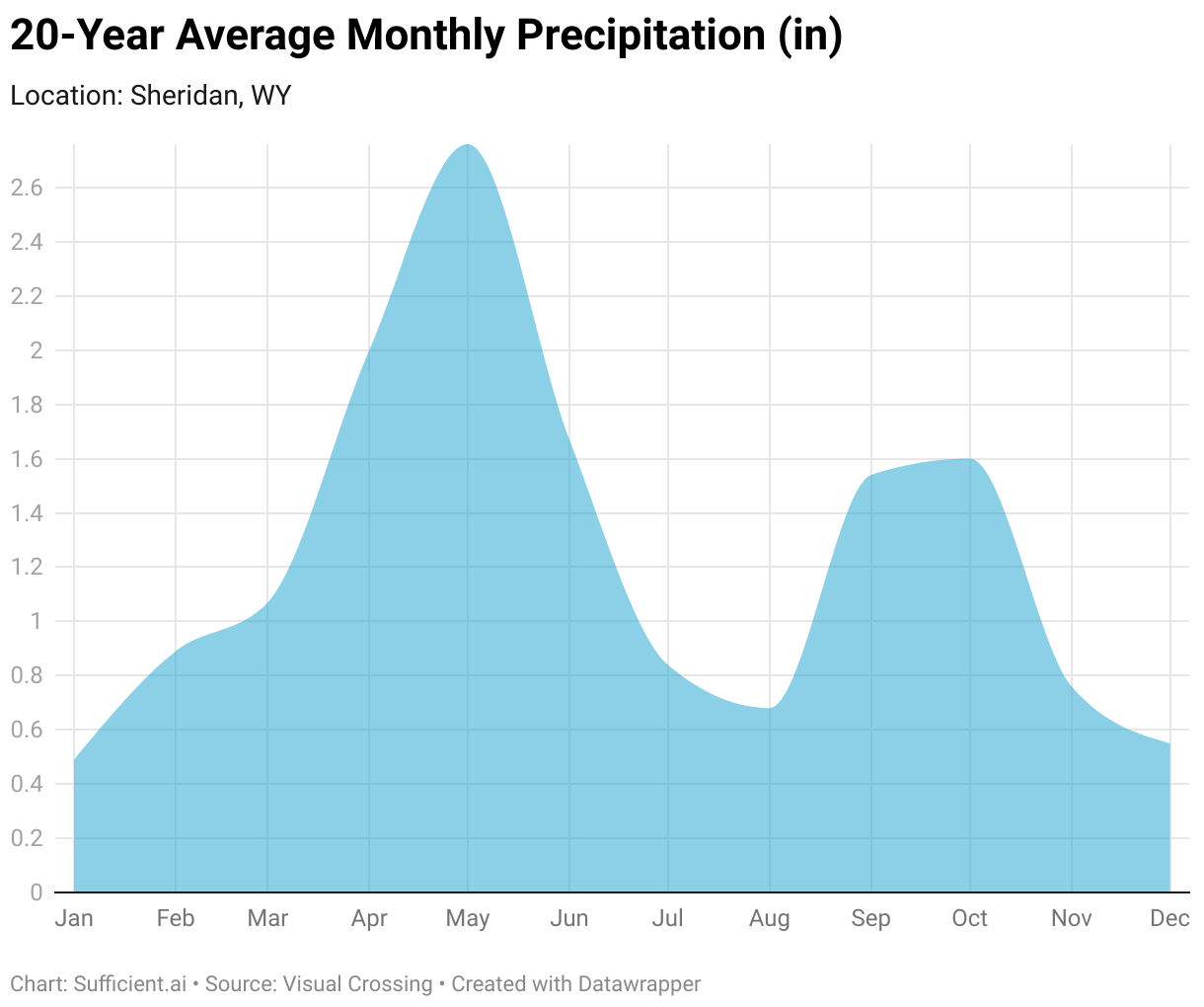
To begin, we’ll need to know how much precipitation your specific location gets relative to your water needs. Here’s a 20-year monthly average for Sheridan, WY.
Environmental and Financial Benefits
The practice of harvesting rainwater has numerous environmental benefits. It reduces the strain on local water resources, decreases the impact of runoff on urban drainage systems, and minimizes soil erosion. Financially, it cuts water bills and, in the long term, offers a return on investment through savings. Additionally, in areas with water scarcity or inadequate water supply, rainwater harvesting can be a lifeline.
Understanding the System
A typical rainwater harvesting system consists of a catchment area, conveyance system, storage tanks, filtration unit, and distribution system. The catchment area, usually the roof, is where rainwater is first collected. Gutters and downspouts form the conveyance system, channeling water to the storage tanks. Before it reaches these tanks, the water passes through filters to remove debris and contaminants. Once stored, the water can be used directly for non-potable purposes or further treated for potable use.
Design and Implementation
Designing a rainwater harvesting system requires careful consideration of several factors:
- Catchment Area: The size and type of roof significantly influence the amount of rainwater that can be harvested. Materials like metal or concrete are preferable for efficient collection.
- Storage Capacity: The size of the storage tank depends on the rainfall pattern, the catchment area, and the water demand. Tanks can be above or below ground, depending on space availability and budget.
- Filtration and Purification: Basic filtration is necessary to remove debris. For using rainwater as potable water, more advanced treatment methods like UV purification may be required.
- Conveyance System: Gutters and downspouts should be designed to maximize water capture and minimize blockages.
Design and Implementation
Before installing a rainwater harvesting system, it’s crucial to check local regulations, as some areas have specific guidelines or restrictions. Regarding health, ensuring the system is well-maintained and the water appropriately treated for its intended use is essential to prevent any health hazards.
Maintenance and Care
Regular maintenance of the rainwater harvesting system is vital for its efficiency and longevity. This includes cleaning gutters, inspecting and cleaning filters, and ensuring the storage tanks are in good condition. It’s also essential to monitor water quality, especially if the water is used for domestic purposes.
Community Impact and Education
Beyond individual homes, rainwater harvesting can have a broader community impact. Communities that collectively implement these systems can significantly reduce their overall water footprint. Educational programs and workshops can raise awareness and encourage more households to adopt this sustainable practice.
Challenges and Solutions
Despite its benefits, rainwater harvesting faces challenges such as initial costs, space constraints, and climatic dependencies. Solutions include government incentives, community-based projects, and technological innovations to optimize water collection and storage in smaller spaces.
Conclusion
Residential rainwater harvesting is more than just a method of water collection; it’s a vital step towards sustainable living. By integrating this system into our homes, we not only contribute to environmental conservation but also ensure a reliable water source for our daily needs. As we face increasing water scarcity and climate change challenges, rainwater harvesting stands out as a practical, viable solution that paves the way for a more sustainable future.